Hotel Booking Platform
Hotel Booking Platform
The Problem
The crypto-native hotel booking marketplace (50,000+ properties) suffered from four core issues: overwhelming, unranked search results (38% of users applied zero filters and left), a trust deficit on property pages (users left to verify on Google/TripAdvisor), price shock at checkout (35% abandonment spike) and no way to compare shortlisted properties.
The crypto-native hotel booking marketplace (50,000+ properties) suffered from four core issues: overwhelming, unranked search results (38% of users applied zero filters and left), a trust deficit on property pages (users left to verify on Google/TripAdvisor), price shock at checkout (35% abandonment spike) and no way to compare shortlisted properties.
The crypto-native hotel booking marketplace (50,000+ properties) suffered from four core issues: overwhelming, unranked search results (38% of users applied zero filters and left), a trust deficit on property pages (users left to verify on Google/TripAdvisor), price shock at checkout (35% abandonment spike) and no way to compare shortlisted properties.
What we Did
Conducted funnel analysis on Mixpanel, 50+ session recordings on Hotjar, 12 user interviews plus 3 with property managers, and competitor benchmarking against Booking.com, Airbnb, Hotels.com and Expedia. Uncovered a stakeholder conflict — teaser pricing vs. full transparent pricing — resolved by A/B testing both approaches in a Maze prototype, which showed transparent pricing nearly tripled checkout completion, giving design the evidence to shift direction.
Conducted funnel analysis on Mixpanel, 50+ session recordings on Hotjar, 12 user interviews plus 3 with property managers, and competitor benchmarking against Booking.com, Airbnb, Hotels.com and Expedia. Uncovered a stakeholder conflict — teaser pricing vs. full transparent pricing — resolved by A/B testing both approaches in a Maze prototype, which showed transparent pricing nearly tripled checkout completion, giving design the evidence to shift direction.
Conducted funnel analysis on Mixpanel, 50+ session recordings on Hotjar, 12 user interviews plus 3 with property managers, and competitor benchmarking against Booking.com, Airbnb, Hotels.com and Expedia. Uncovered a stakeholder conflict — teaser pricing vs. full transparent pricing — resolved by A/B testing both approaches in a Maze prototype, which showed transparent pricing nearly tripled checkout completion, giving design the evidence to shift direction.

The Solution
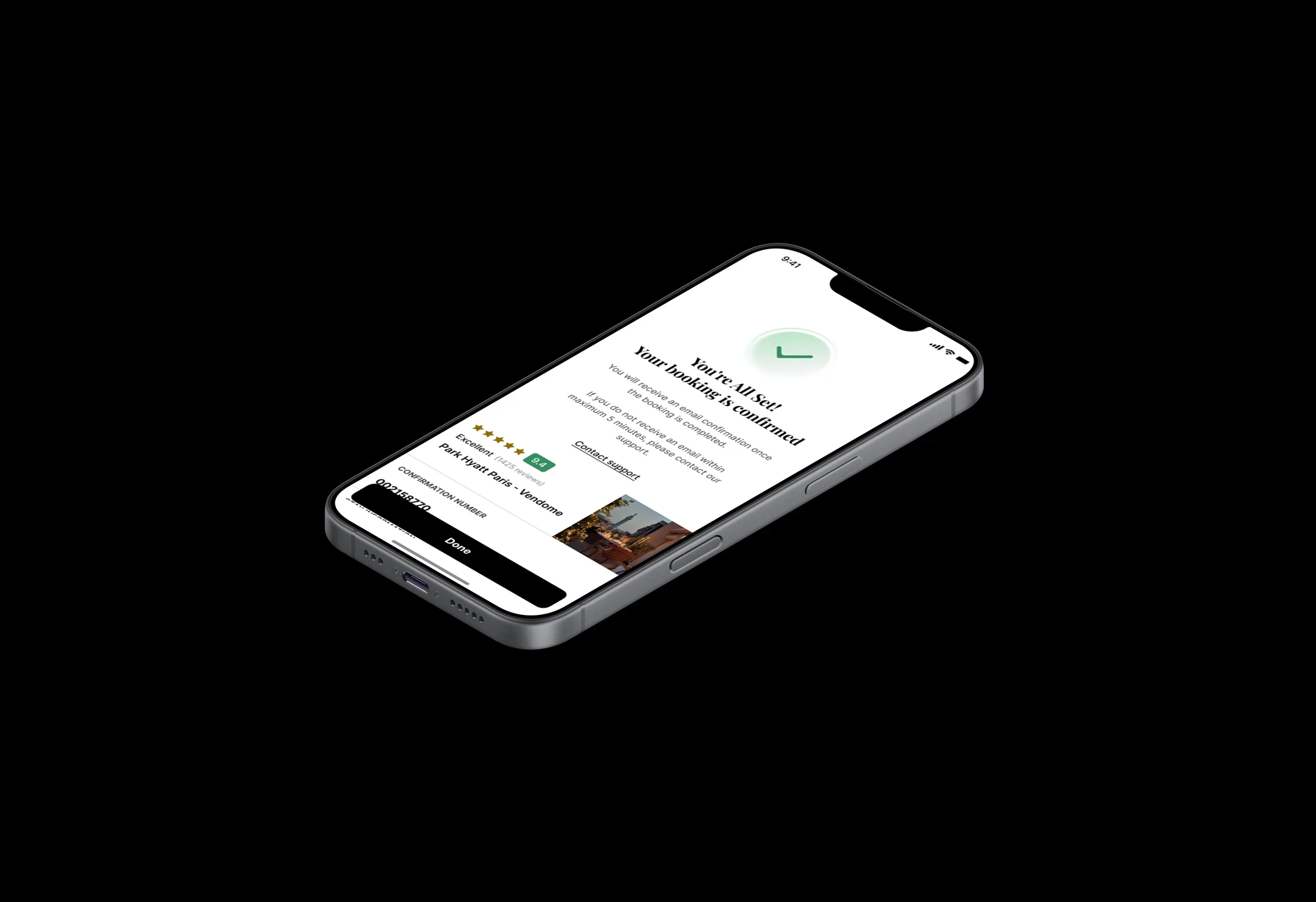
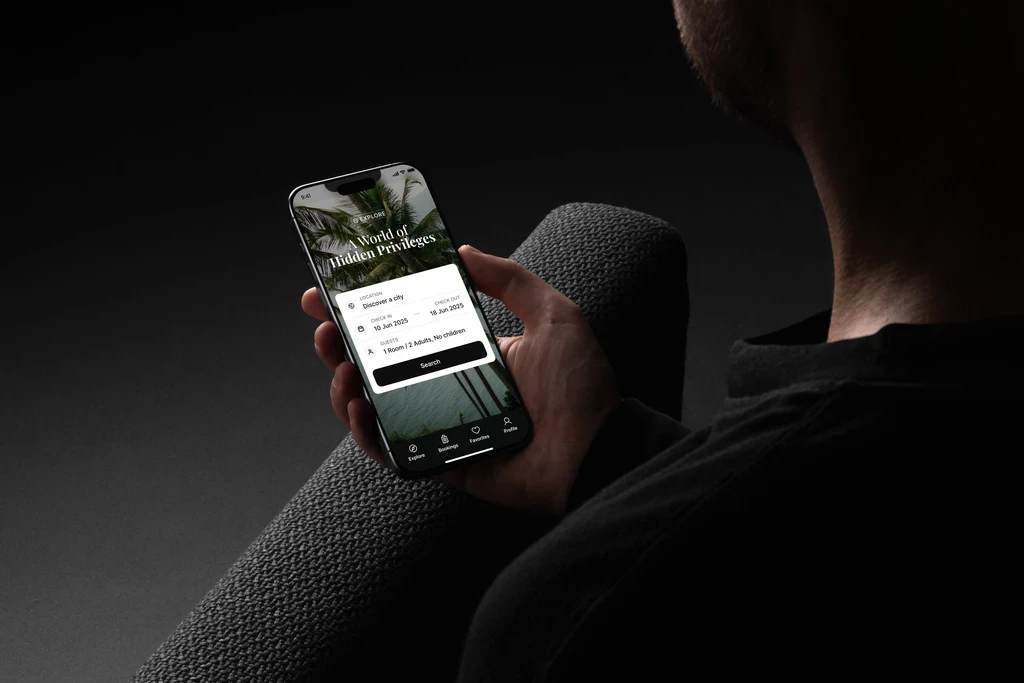
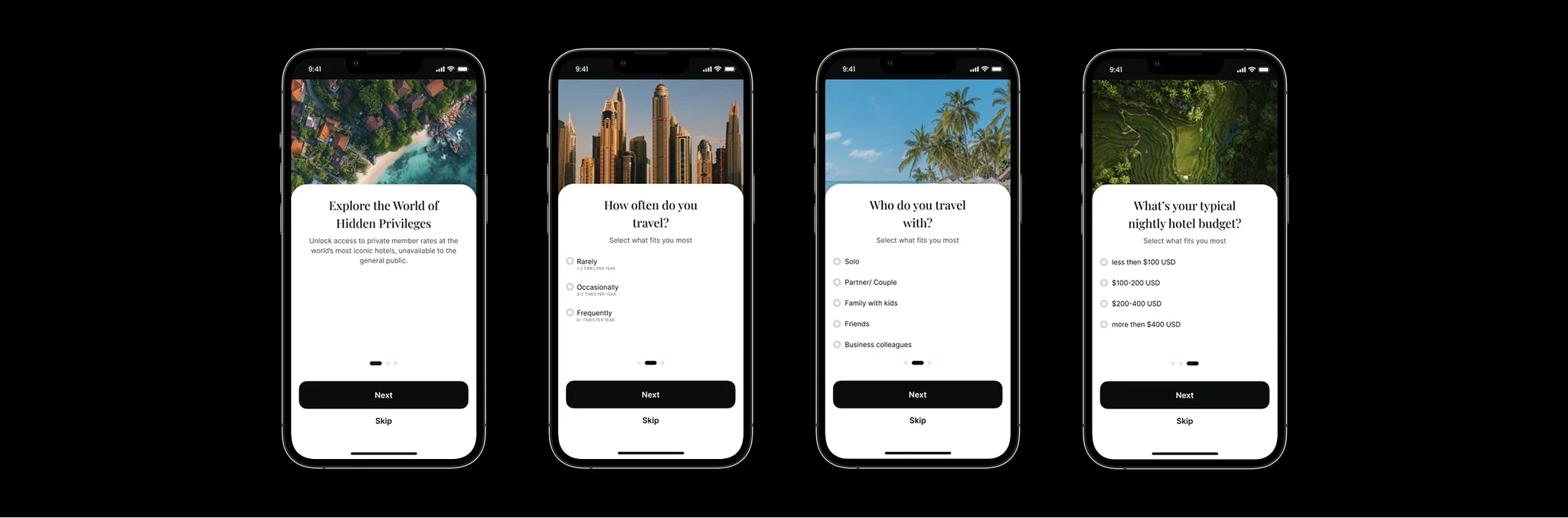
Redesigned the entire booking journey around one principle: surface trust signals and full pricing before users need them, never after. This meant total-inclusive pricing and smart persistent filters in search results, a restructured property page leading with verified photos/trust badges and a persistent price bar, and a transparent checkout panel showing the full cost breakdown from the moment a room is selected, with nothing new appearing at payment.
Redesigned the entire booking journey around one principle: surface trust signals and full pricing before users need them, never after. This meant total-inclusive pricing and smart persistent filters in search results, a restructured property page leading with verified photos/trust badges and a persistent price bar, and a transparent checkout panel showing the full cost breakdown from the moment a room is selected, with nothing new appearing at payment.
Redesigned the entire booking journey around one principle: surface trust signals and full pricing before users need them, never after. This meant total-inclusive pricing and smart persistent filters in search results, a restructured property page leading with verified photos/trust badges and a persistent price bar, and a transparent checkout panel showing the full cost breakdown from the moment a room is selected, with nothing new appearing at payment.
Outcome
Checkout conversion rose from 27% to 84%; the share of users surprised by the final price at payment dropped from 72% to 11%; and search-to-result time improved 40%, with filter usage climbing from 28% to 71%.
Checkout conversion rose from 27% to 84%; the share of users surprised by the final price at payment dropped from 72% to 11%; and search-to-result time improved 40%, with filter usage climbing from 28% to 71%.
Checkout conversion rose from 27% to 84%; the share of users surprised by the final price at payment dropped from 72% to 11%; and search-to-result time improved 40%, with filter usage climbing from 28% to 71%.